Showing posts with label struggles. Show all posts

Wednesday, June 26, 2024

Facing Into What is Happening through the Eyes of Directors, Zaya & Maurizio Benazzo

Facing Into What is Happening through the Eyes of Directors, Zaya & Maurizio Benazzo

By Kathleen Mary Willis

Posted on June 27, 2024


Film directors, Zaya and Maurizio Benazzo, created a few years ago a movie called, Where Olive Trees Weep, that is just now being screened (by donation) explaining what has happened in Palestine. Dr. Gabor Maté is also a part of this.

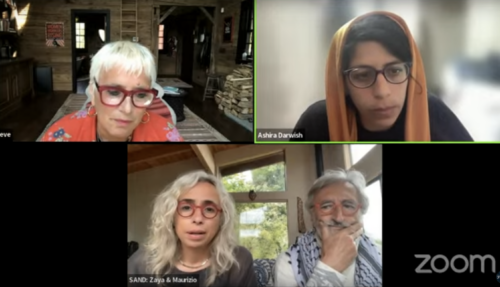
Below is a discussion between (Eve Ensler) V, who created One Billion Rising, and Ashira, Palestinian journalist and therapist, who stars in Where Olive Trees Weep.

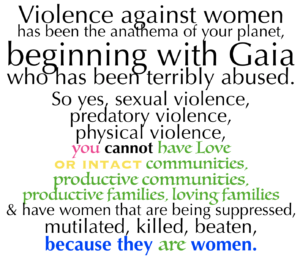
In the movie are stories of Palestinian sumud (steadfast perseverance) with occupation. Their narratives expose how colonialism is a gender-based crime inextricable from the repression of female self-determination.

Where Olive Trees Weep is a film about the struggles and resilience of Palestinian people. It explores themes of loss, trauma, and the quest for justice.

This movie features Palestinian journalist and therapist Ashira Darwish, grassroots activist Ahed Tamimi, and Israeli journalist Amira Hass, and also Dr. Gabor Maté as he offers trauma-healing work to Palestinian women, his facing into the trauma, as opposed to turning away from it.

The transmutation of the energy, particularly by the women standing up, enduring, dancing and singing in the face of their fears.

We can all do this in the stillness of our being, face into our fears, feel them to heal them, overcome them by letting go of being right . . .

“Being right is what leads to war . . . ” ~ Sanat Kumara, the Law of Balance, As Within So Without, As Above So Below.

There is no war above.

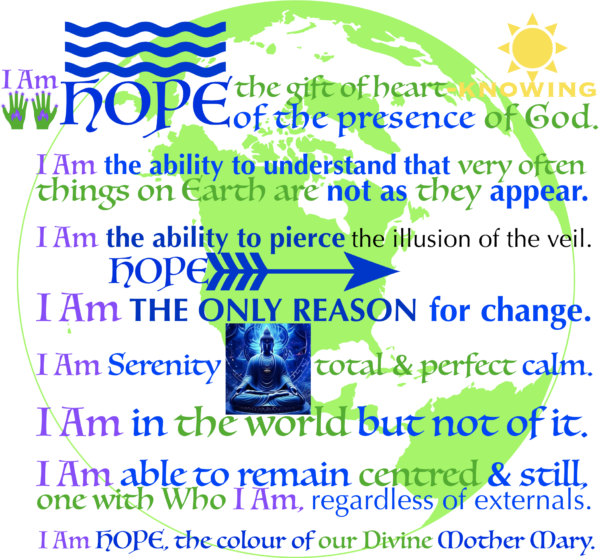
From Mother Mary, Her Blessing and Virtue of Hope:

From the inside out, embracing HOPE;
time for PEACE on Earth.

As Within So Without
. . . until we see that reflection . . .

Kathleen Mary Willis

Sunday, March 24, 2024

Embracing Sacred Love and Unity Course

Embracing Sacred Love and Unity Course

Linda Dillon and the Council of Love

by Steve Beckow

Posted on March 24, 2024


I’ve been having the most interesting conversation with the Council which I want to share with you. If I ask the question “do you want peace?” the answer would invariably be a resounding yes. But if I ask do you want unity there is hesitation, even a degree of reluctance!

Why?

Because Unity entails surrender of the desire to be right, to have a sense of victory that your thoughts, time, and efforts were worth it. That the struggles, sacrifices and investment of your sacred being was somehow worth it. And that is the miasma, the lack of clarity, around Unity and Sacred Love.

Is it that we don’t want to willingly surrender what we have held to be true? Or is it that during this time of such chaos and separation that we are fearful of losing ground to what we believe as less than loving actions or opinions of others? Is it our collective belief that victory somehow anoints?

The quintessential element of Unity is us making the very personal sovereign decision that it is more important to be Love than to be right. It’s about being that pathfinder that is willing to forge ahead, find and create new alternatives even when that pathway isn’t clear or obvious. It’s about us as lightworkers and love-holders making the choice to find and create a different way, leaving the friction, division, separation and confusion behind. And it can be terrifying, exciting and the most important thing we ever do here on planet in form.

Unity does NOT mean uniformity; it does not mean permission; and it does not entail agreement. It does mean maintaining our Divine Neutrality – embracing, inviting, choosing a different way to be here on Terra Gaia. It does entail acceptance of how collectively we are proceeding in division is not what our hearts truly desire or even what our spirit demands! And Unity, that wondrous place of balance and deep connection of love, can’t be done alone.

So, I really hope you will come and join me to come explore this new territory with the Council of Love and your community of loving, supportive Bravehearts. Together we can do this, create a world that’s good and kind and works for everybody. We can do this!. xxx

For further information on Embracing Sacred Love & Unity click here. 

From my heart to yours, all my love, Linda

Council of Love
3406 SE Hart Cir
Port Saint Lucie
Florida 34984
United States

Steve Beckow

Monday, February 26, 2024

7 Struggles Unloved Sons Have Later in Life

7 Struggles Unloved Sons Have Later in Life

By Sherrie Hurd, A.A.

learning-mind.com

Posted on February 26, 2024


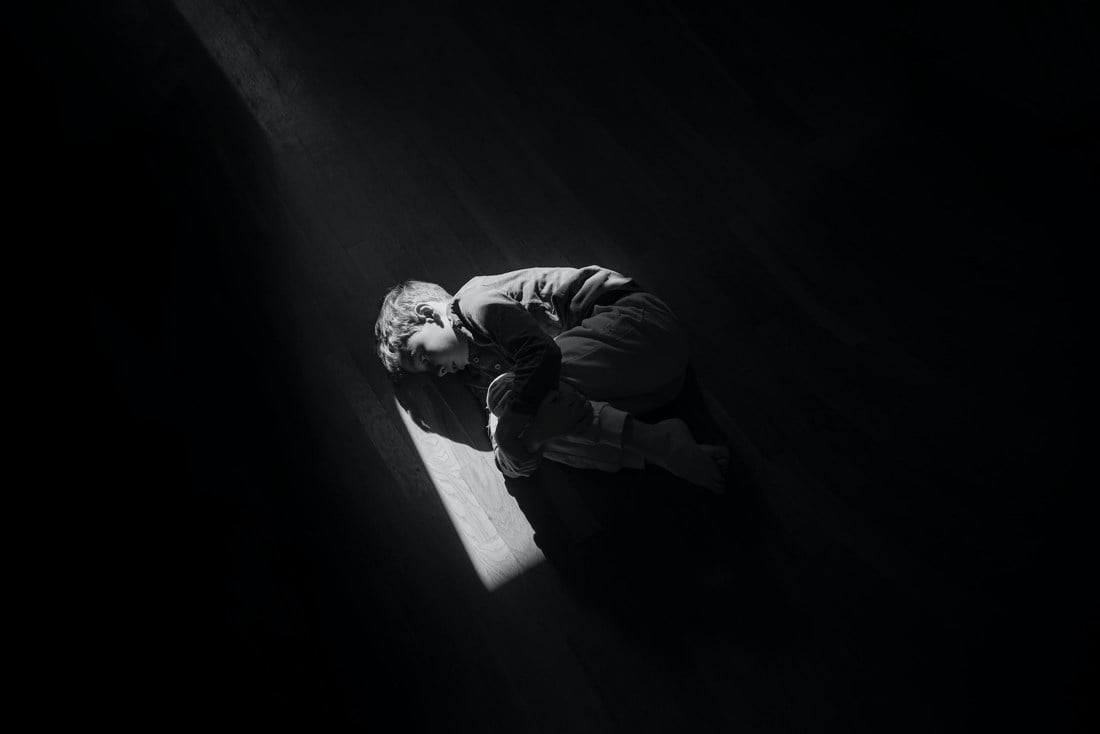
Adult men struggle in many ways due to being unloved as a child. These issues can range from minor to completely unbearable, adding anxiety and toxic behavior to the ordinary stressors of life.

There are many forms of childhood mistreatment, including physical and mental abuse. However, it doesn’t seem like we’ve analyzed childhood neglect properly.

Neglect can be intentional and unintentional. First off, you could be a man who experience neglect as a child, but it was only due to the immature parenting and selfishness of your family. Then again, you could have experienced intentional neglect and a lack of basic love.

Unloved sons and their difficulties

Being unloved as a child can be devastating in adulthood. Relationships, jobs, and friends can all be affected by your past. It’s important to understand where certain feelings come from – your roots – but it is also important to recognize the cause of your present struggles. So, what are some struggles that unloved sons deal with in adulthood?

1. Drawn to toxicity

Unloved sons struggle with toxic relationships in adulthood. You see, they subconsciously seek out unhealthy partnerships because they are familiar with the traits exhibited by the object of their affection. These traits resemble some of the same characteristics that they experienced from their caregivers in childhood.

The brain recognizes patterns and follows these patterns because it seems ‘normal’ and familiar. The brain of an unloved son matches memory with outside stimuli. In layman’s terms, men seek the same form of relationship that they had in childhood, which was also unhealthy. Until they recognize the pattern and understand its harmful, it will repeat.

2. Depression and anxiety

It’s not surprising that men with depression or anxiety have a history of being neglected as a child. Being neglected and unloved as a child, and not healing from this, can cause severe negative feelings that lead to depression. It can also cause unwarranted fears and anxious behaviors, as unloved sons are constantly afraid of being neglected again.

3. Trust issues

If you were an unloved son, you probably struggle with trust issues. Every time you’re asked to trust someone, it feels almost impossible to do so.

Let’s consider this: your own mother, father, or other family members couldn’t even cultivate a healthy attachment with you. And so, they couldn’t be trusted to love you unconditionally. And so, in adulthood, trusting another individual with other things can be one of the most difficult tasks in the world.

4. Codependency issues

Suffering from neglect in childhood can cause severe codependency issues as an adult. You see, codependency is when you feel like you cannot function properly unless you’re attached to another person. And this is not a healthy attachment, it’s an obsessive type of attachment, as you’re trying to develop a strong bond that you didn’t have as a child.

Unfortunately, this attempt at bonding goes overboard creating strong codependency – you base every aspect of your life according to another person.

5. Feeling isolated

Some men choose to be alone, and that’s perfectly fine. However, there are others who isolate themselves because they believe forming bonds is impossible. This means having few to no friends, staying away from family members, and never getting romantically involved.

It’s kind of the opposite reaction to codependency. Instead of becoming overly attached, isolated men believe that since they were unloved in childhood, they are better off alone in adulthood. While introversion is not unhealthy, isolation can be. This is because there are different motivations and reasons behind these choices.

6. Insecurity

Men struggle with insecurity, sometimes on chronic levels.

Due to the absence of love in childhood, a boy’s self-esteem can drop so low that they develop narcissistic behaviors well before adulthood. This continues to develop into a false sense of security. This faux security serves as a mask to cover true insecurities developed from neglect. This type of insecurity can manifest in lying, anger, and deception, causing problems at work and in relationships.

7. Fear of failure

When sons are unloved, they grow up feeling like they’ve failed their families. So, to avoid further failures, they tend to exhibit strange traits. Fear of failure, when it comes to men, manifests as ‘playing it safe’, where instead of taking risks, these individuals only do what’s easy.

Fear of failure also manifests in ‘shifting of blame’, where they are never willing to take responsibility for their actions or mistakes. A man who suffered from neglect feels that if he admits to making a mistake, he will be unloved again. This cannot happen.

Unloved sons can become unloved men

Unfortunately, the struggles of adult men who were neglected as children can hurt them in permanent ways. Personality disorders are common results of childhood trauma, and these disorders can further isolate men from others.

The negative traits that arise from some of these struggles can drive others away and cause monumental damage. Adults who do not seek help for these issues will believe their own lies and decline rapidly as a result of their struggles.

If caught in childhood, the scars of neglect can be reversed. Just keep in mind, that the longer a son goes unloved, the more likely the man will become intolerable and miserable in adulthood.
Let’s put a stop to childhood neglect.


Sherrie Hurd

About the author:
 

Staff writer at Learning Mind
Sherrie Hurd is a professional writer and artist with over 20 years of experience. As a survivor of childhood trauma and multiple types of abuse, she is an advocate for mental health awareness. Sherrie manages multiple mental illnesses, including anxiety disorder, bipolar disorder, and PTSD. With this background and personal experience, she strives to help others overcome trauma and abuse, cope with mental illness, and heal over time.

Copyright © 2012-2024 Learning Mind. All rights reserved. For permission to reprint, contact us.